
 Image 1 of 1
2nd-3rd century AD
Length: 2.5 cm
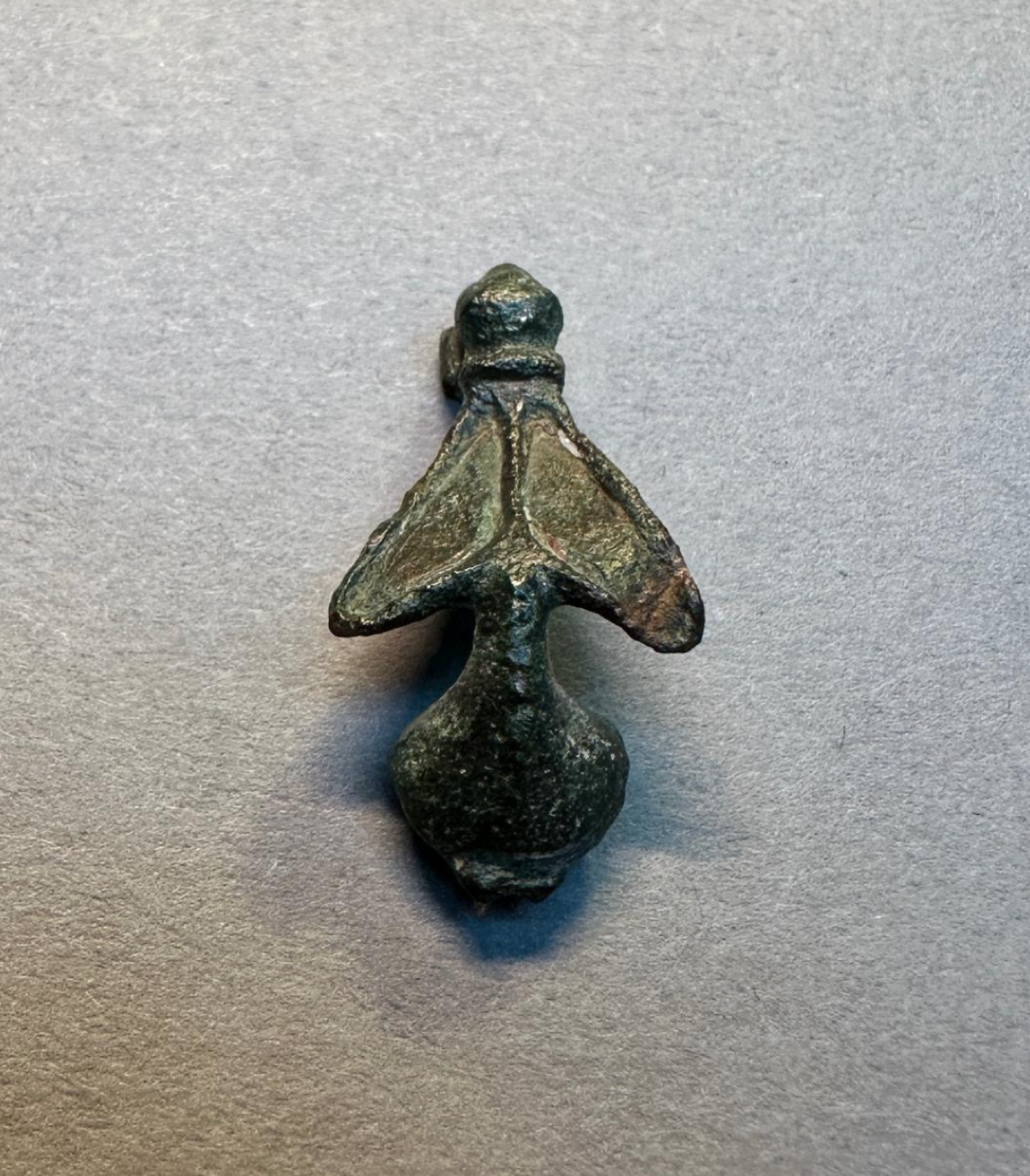
A variation on the trumpet-headed brooch, the insect is shown with triangular wings inlaid with two cells of enamel now missing and a pointed head.
Literature: See Richard Hattatt, 'Brooches of Antiquity', (Oxford, 1987) pp. 141 and 143, no. 974-5 for a similar example. Also R. Hattatt, 'Ancient and Romano-British Brooches', (Dorset, 1982) p. 112, no. 88a. Richard Hattatt, 'Iron Age and Roman Brooches' (Oxford, 1985) pp.116-117 show two more examples. Catherine Johns, 'The Jewellery of Roman Britain, Celtic and Classical Traditions' (London, 1996) p. 164, fig. 7.10. discusses the type, 'The fly has no obvious symbolic significance, and it might well have developed....merely as a visual conceit.'
Provenance: Private collection UK, acquired 1990; With Rupert Wace Ancient Art, 2008
2nd-3rd century AD
Length: 2.5 cm
A variation on the trumpet-headed brooch, the insect is shown with triangular wings inlaid with two cells of enamel now missing and a pointed head.
Literature: See Richard Hattatt, 'Brooches of Antiquity', (Oxford, 1987) pp. 141 and 143, no. 974-5 for a similar example. Also R. Hattatt, 'Ancient and Romano-British Brooches', (Dorset, 1982) p. 112, no. 88a. Richard Hattatt, 'Iron Age and Roman Brooches' (Oxford, 1985) pp.116-117 show two more examples. Catherine Johns, 'The Jewellery of Roman Britain, Celtic and Classical Traditions' (London, 1996) p. 164, fig. 7.10. discusses the type, 'The fly has no obvious symbolic significance, and it might well have developed....merely as a visual conceit.'
Provenance: Private collection UK, acquired 1990; With Rupert Wace Ancient Art, 2008