
 Image 1 of 1
6th - 5th century BC
Length: 2.5 cm
Provenance: UK collection, acquired 1970s to 1990s; Acquired from the liquidated estate of the above, with Rupert Wace Ancient Art, 2011
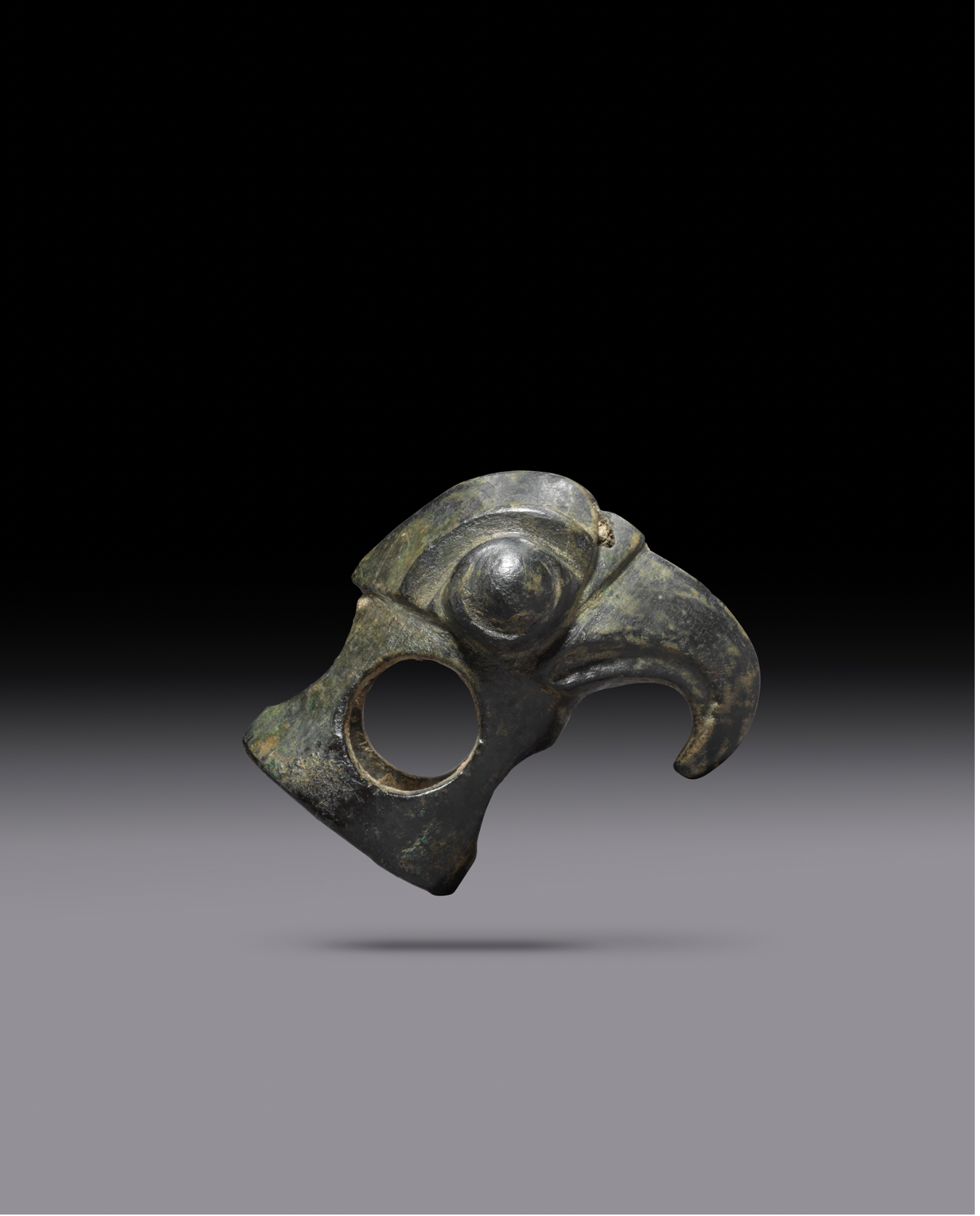
In the form of a raptor or eagle's head with prominent bossed eyes and a moulded brow, the beak sharply hooked. Part of a horse's trappings, the hollow neck has four circular holes for threading and distributing the harness straps.
A nomadic people living on the plains to the north of the Black Sea, the Scythians were famed and feared throughout antiquity for their excellent horsemanship and are typically depicted in Classical Greek art as mounted warriors.
Literature: A rather more stylised pommel in the collection of the Musee Barbier-Mueller is of comparable form: J. P. Barbier, 'Art des Steppes', Geneva, 1996, p. 36, cat. no. 5, fig. 31.
6th - 5th century BC
Length: 2.5 cm
Provenance: UK collection, acquired 1970s to 1990s; Acquired from the liquidated estate of the above, with Rupert Wace Ancient Art, 2011
In the form of a raptor or eagle's head with prominent bossed eyes and a moulded brow, the beak sharply hooked. Part of a horse's trappings, the hollow neck has four circular holes for threading and distributing the harness straps.
A nomadic people living on the plains to the north of the Black Sea, the Scythians were famed and feared throughout antiquity for their excellent horsemanship and are typically depicted in Classical Greek art as mounted warriors.
Literature: A rather more stylised pommel in the collection of the Musee Barbier-Mueller is of comparable form: J. P. Barbier, 'Art des Steppes', Geneva, 1996, p. 36, cat. no. 5, fig. 31.