
 Image 1 of 2
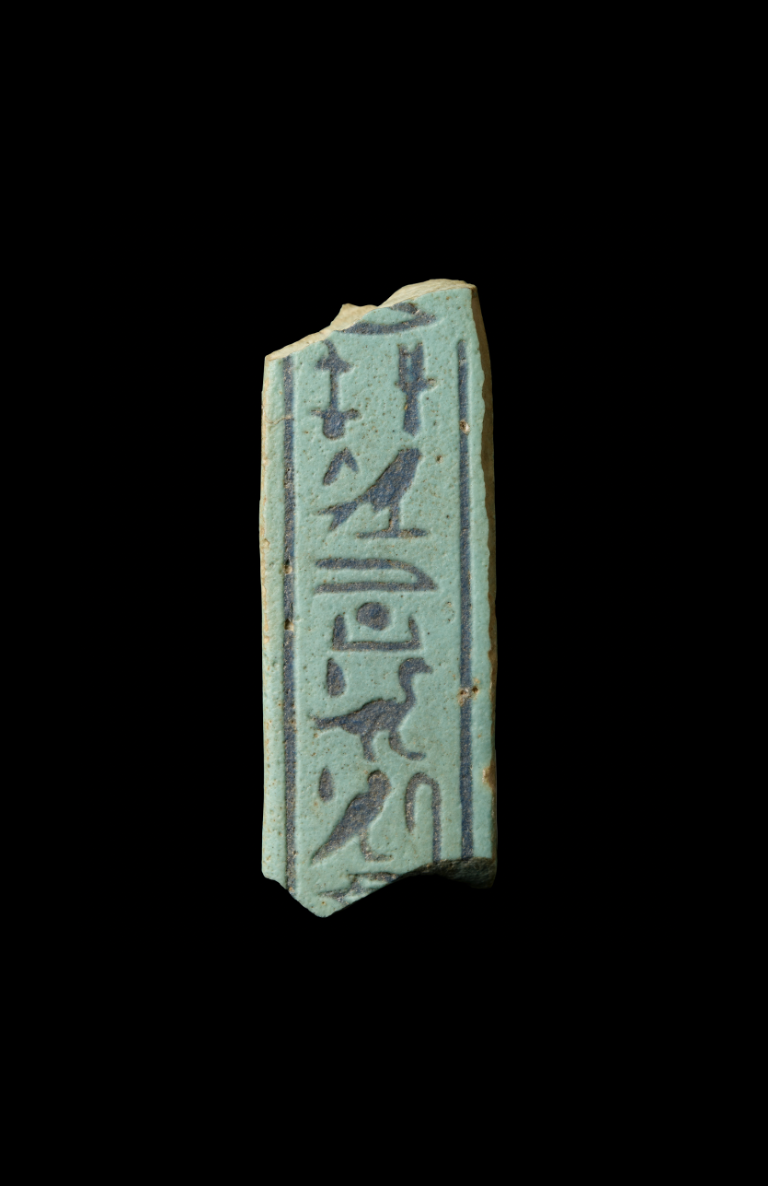 Image 2 of 2
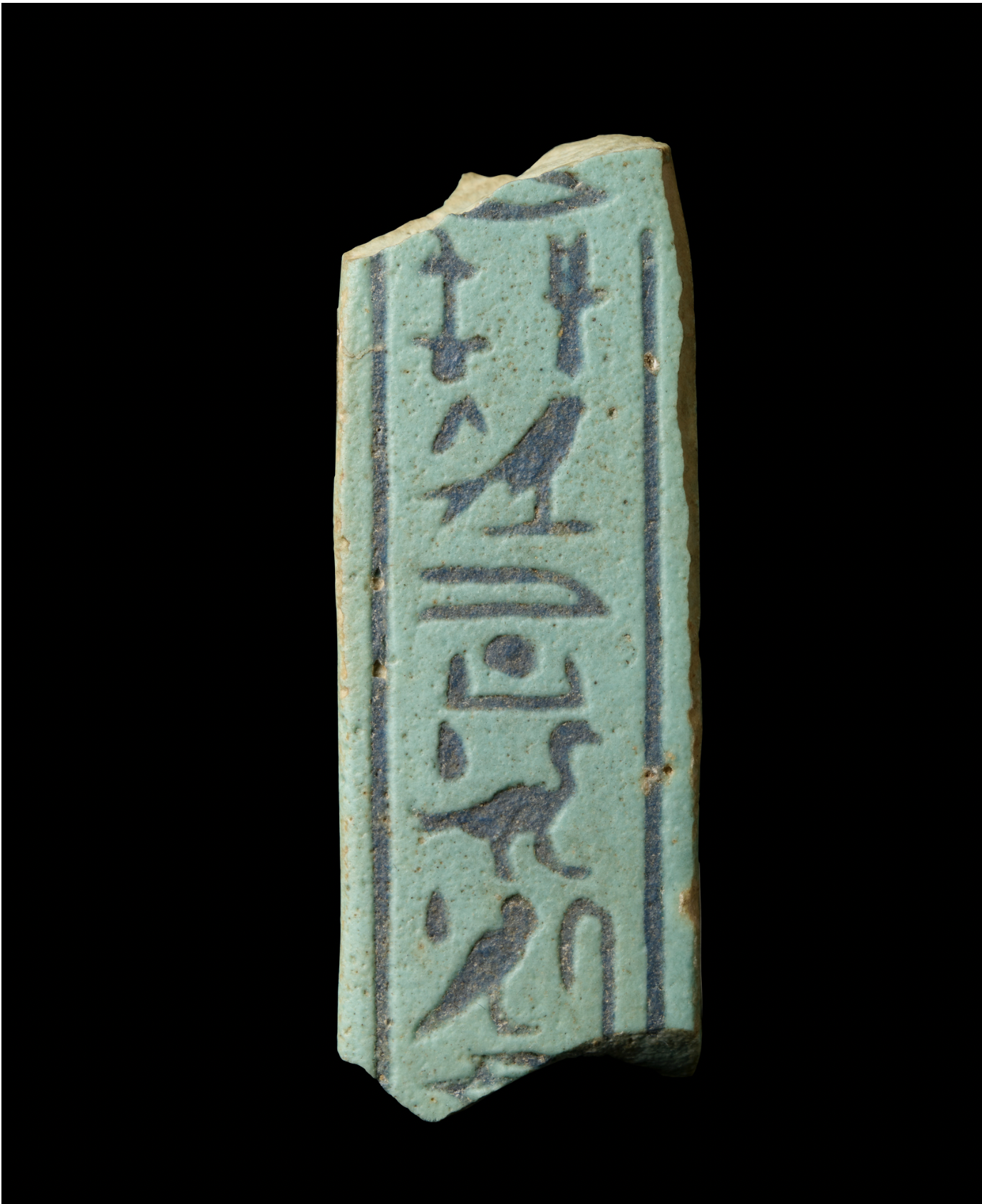
Late Dynastic Period, circa 664-525 BC
height: 6.5 cm; width: 2.5 cm
A bi-chrome-faience inlay or back-pillar of a statue with vertical separators and hieroglyphs in dark blue, glazed faience tile-shaped inlay. The inscription reads: r wr mDw Smaw im sA kA ra sm ç.
Translation: Complains to the magnate of the tens of Upper Egypt, son of the Ka of Re.
- "r wr" could be interpreted as a reference to something significant or great, often indicative of "great" (wr meaning "great").
- "mDw Smaw" can refer to "The Language of the South" or "speech of the south," possibly referencing a geographical or cultural area.
- "im sA" could mean "there is protection" or relate to a name or title involving "protection."
- "kA ra" typically refers to "Ka of Ra," associating with the life force or spirit of the sun god Ra.
- "sm" might mean "unite" or "join," often associated with reunification or bringing together.
Provenance: Private British collection, acquired in the 1970s-90s; Property of a private collector, 2006-2014, and thence to a private foundation
For our European clients: Please be aware there are new restrictive policies regarding the import of non-European antiquities into the European Union. You can read more about Regulation (EU) 2019/880 here.