
 Image 1 of 2
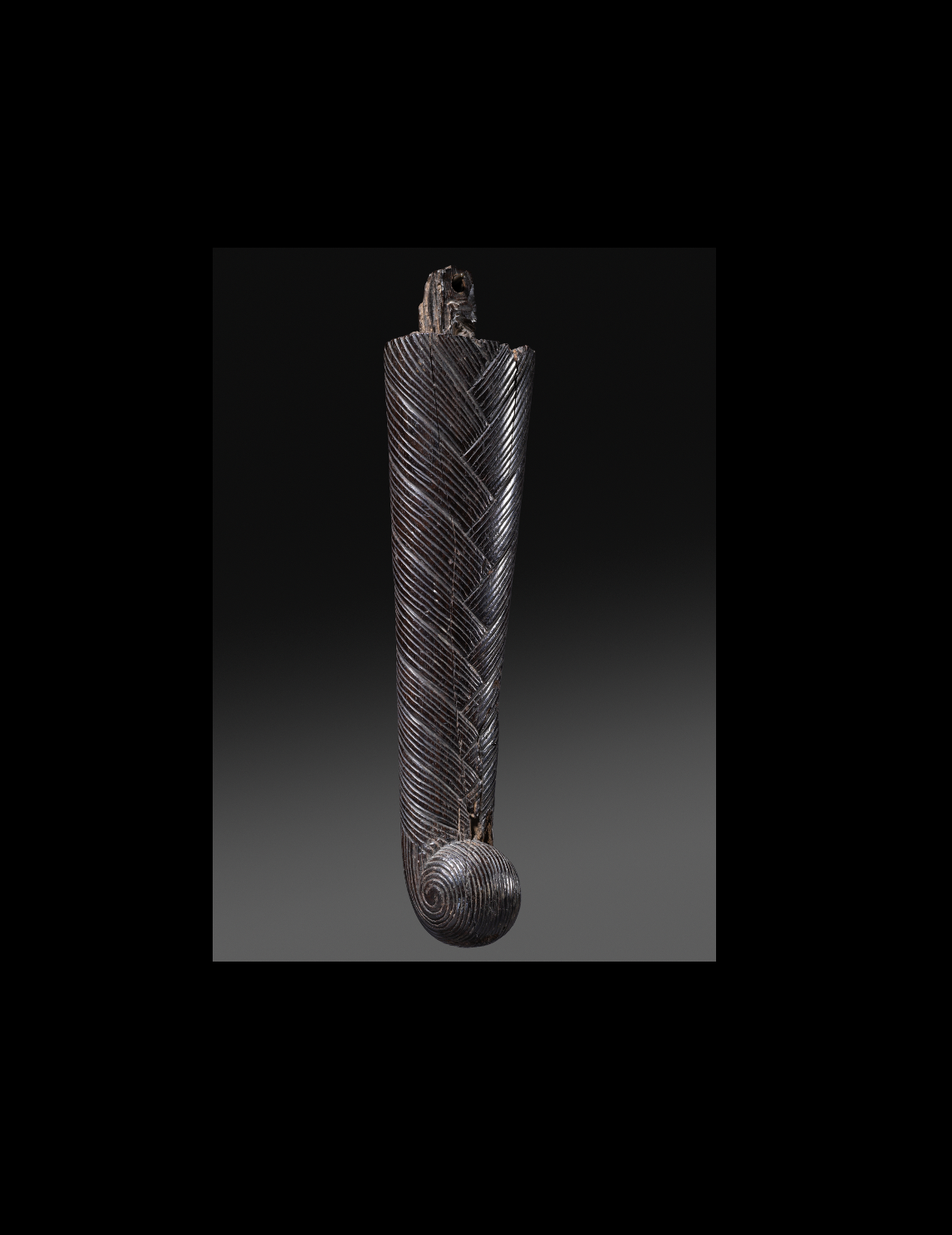 Image 2 of 2
New Kingdom, 18th Dynasty, 1540-1295 BC
Length: 19 cm
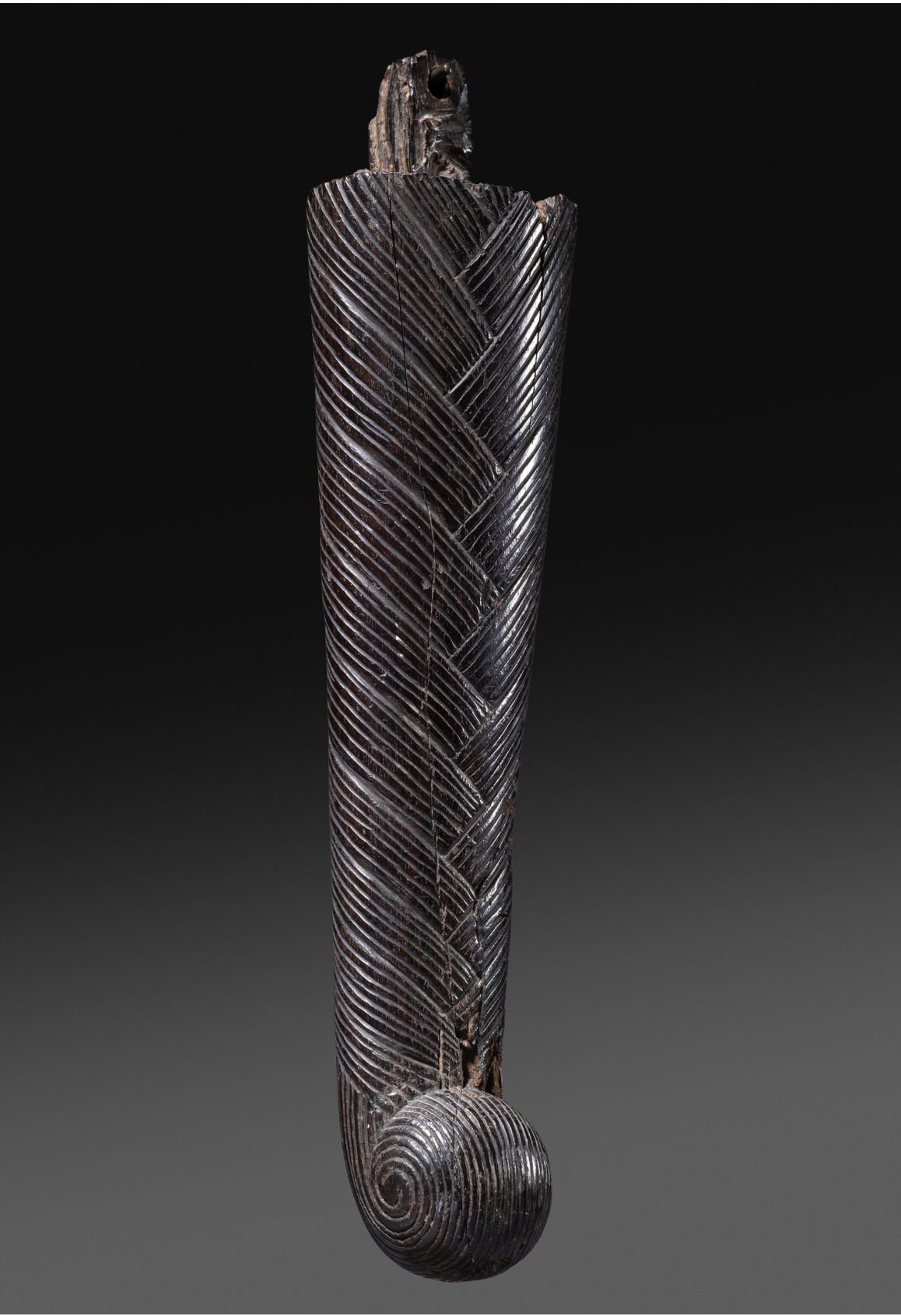
The false beard finely carved with individual hair strands incised at the front and around the sides, the plait tapering towards the bottom, the end curling out and up. The top concave to accommodate the chin, a tenon with drilled hole for attachment.
These plaited beards with forward curling end were a sign of kingship, identifying the pharaohs with the god Osiris.
Condition: Intact, though some minor damage to the fixing
Literature: A Ptolemaic head of Osiris now in the Brooklyn Museum (Acc. no. 58.94) shows how such a beard could be incorporated in a composite statue. The proportions of this smaller object suggest that our example would have been from a life-size figure if it comes from such a non funerary context.
In a funerary context, probably the most obvious, and certainly the most famous, false beard on a mask is that of the gold mask of Tutankhamun. The coffin of Penu, a complete wooden sarcophagus illustrated and discussed in Sue D'Auria, Peter Lacovara and Catherine Roehrig, 'Mummies & Magic - The Funerary Arts of Ancient Egypt' (Boston 1988), p.168, no.120, shows another alternative context. The fine quality of our example, from the Golden Age of Egyptian art, is apparent when compared with Penu's beard.
Provenance: Collection of the Ciancimino family, acquired prior to 1970
For our European clients: Please be aware there are new restrictive policies regarding the import of non-European antiquities into the European Union. You can read more about Regulation (EU) 2019/880 here.