
 Image 1 of 1
Roman, circa 1st century AD
Intaglio: width: 2 cm; width: 15 cm, ring: diameter: 2.5 cm Ring size Q/R
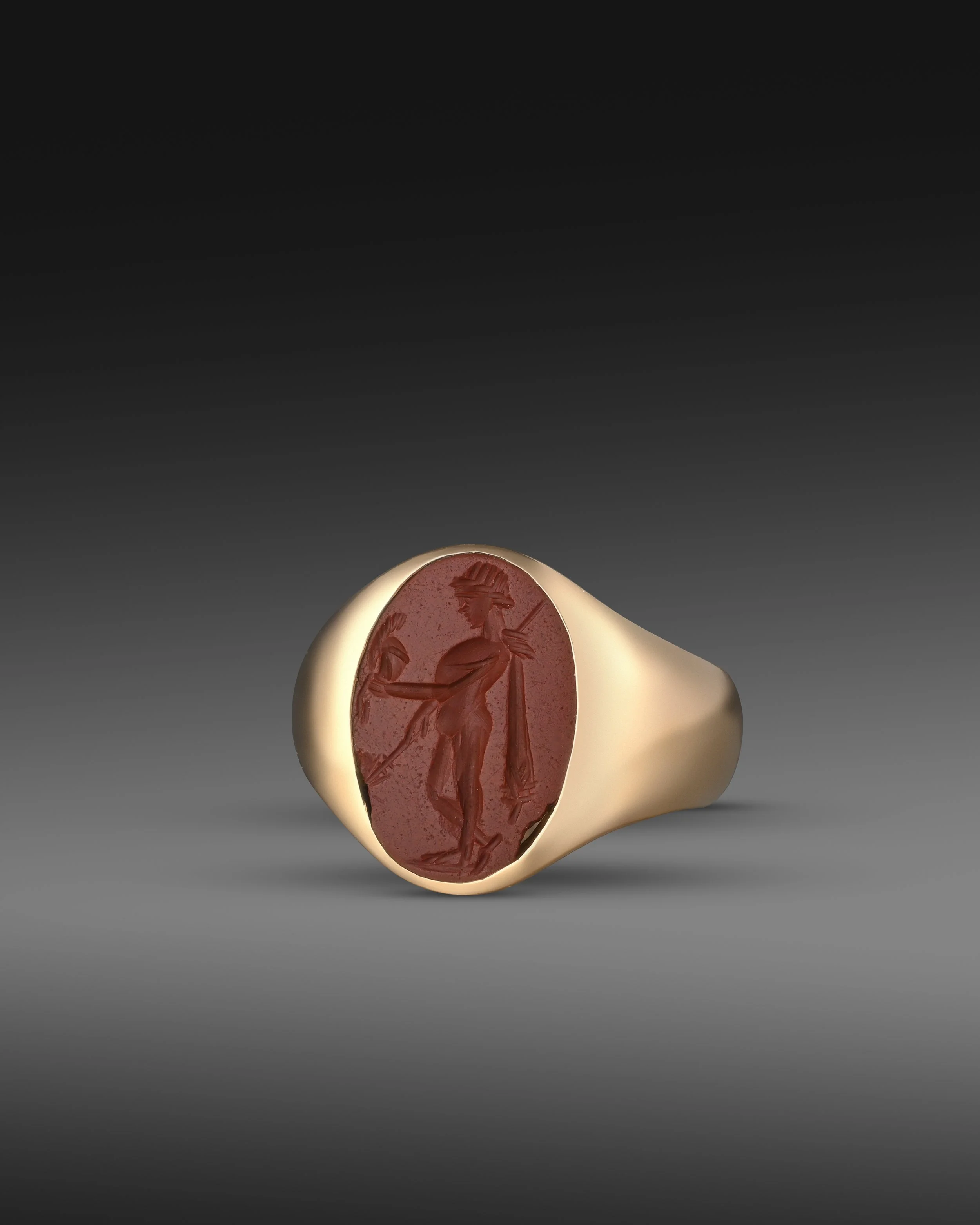
A fine carnelian intaglio, set in a modern gold ring. carved with meticulous precision and detail, intaglio depicts a warrior holding and looking at a crested helmet.
Carnelian was a popular choice for Roman signet rings, prized for its hardness which allowed for the creation of intricate, engraved designs. These intaglios, often depicting gods, goddesses, or other symbolic figures, served as seals for documents and as symbols of wealth and power.
Carnelian is a variety of polycrystalline quartz and belongs to the chalcedony family. This material is mainly composed of iron oxide and therefore displays a reddish-brown colour. It appears opaque and displays a vitreous lustre on the polished surfaces.
Condition: The cut, a flat oval cabochon, has a linear outline except for minor fractures on the bottom right and left side.
Roman, circa 1st century AD
Intaglio: width: 2 cm; width: 15 cm, ring: diameter: 2.5 cm Ring size Q/R
A fine carnelian intaglio, set in a modern gold ring. carved with meticulous precision and detail, intaglio depicts a warrior holding and looking at a crested helmet.
Carnelian was a popular choice for Roman signet rings, prized for its hardness which allowed for the creation of intricate, engraved designs. These intaglios, often depicting gods, goddesses, or other symbolic figures, served as seals for documents and as symbols of wealth and power.
Carnelian is a variety of polycrystalline quartz and belongs to the chalcedony family. This material is mainly composed of iron oxide and therefore displays a reddish-brown colour. It appears opaque and displays a vitreous lustre on the polished surfaces.
Condition: The cut, a flat oval cabochon, has a linear outline except for minor fractures on the bottom right and left side.