
 Image 1 of 1
50 BC
Length: 13mm, Width: 10mm, Depth: 5mm
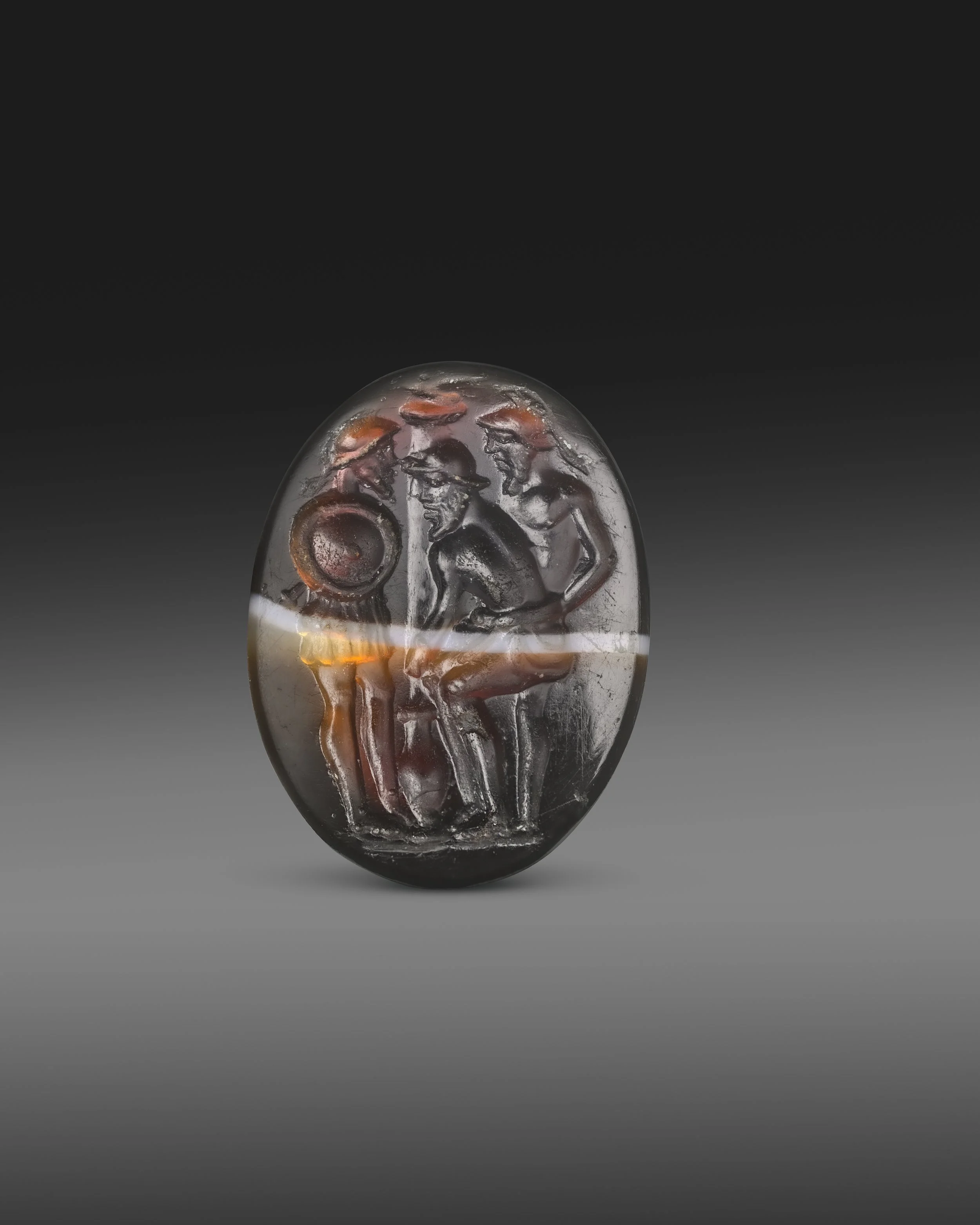
Banded white and brown translucent sardonyx oval cabochon intaglio depicting a mythologcal scene. It shows three of the Seven against Thebes, who are drawing lots for the Gates of Thebes. In the centre stands a handleless krater with a wide body. To the left of it stands a bearded hoplite, upright as if in parade posture. A similarly armed but beardless warrior bends down from the right toward the vessel and places his lot into the opening.
The imagery alludes to the myth of the Seven Against Thebes, in which seven Argive heroes, led by Polynices, drew lots to assign themselves to the gates of Thebes before their doomed assault on the city. The episode emphasises themes of fate, ritual, and heroic destiny central to Greek tragic tradition.
Sardonyx is a type of chalcedony (polycristalline quartz) displaying a vitreous lustre.
Literature: See an orange carnelian example, Wien, Kunsthistoriches Museum Inv No IX B 1299, 50a.c.
50 BC
Length: 13mm, Width: 10mm, Depth: 5mm
Banded white and brown translucent sardonyx oval cabochon intaglio depicting a mythologcal scene. It shows three of the Seven against Thebes, who are drawing lots for the Gates of Thebes. In the centre stands a handleless krater with a wide body. To the left of it stands a bearded hoplite, upright as if in parade posture. A similarly armed but beardless warrior bends down from the right toward the vessel and places his lot into the opening.
The imagery alludes to the myth of the Seven Against Thebes, in which seven Argive heroes, led by Polynices, drew lots to assign themselves to the gates of Thebes before their doomed assault on the city. The episode emphasises themes of fate, ritual, and heroic destiny central to Greek tragic tradition.
Sardonyx is a type of chalcedony (polycristalline quartz) displaying a vitreous lustre.
Literature: See an orange carnelian example, Wien, Kunsthistoriches Museum Inv No IX B 1299, 50a.c.