
 Image 1 of 1
c. 1st-2nd century AD
Length: 14mm, Width: 11mm, Depth: 3mm
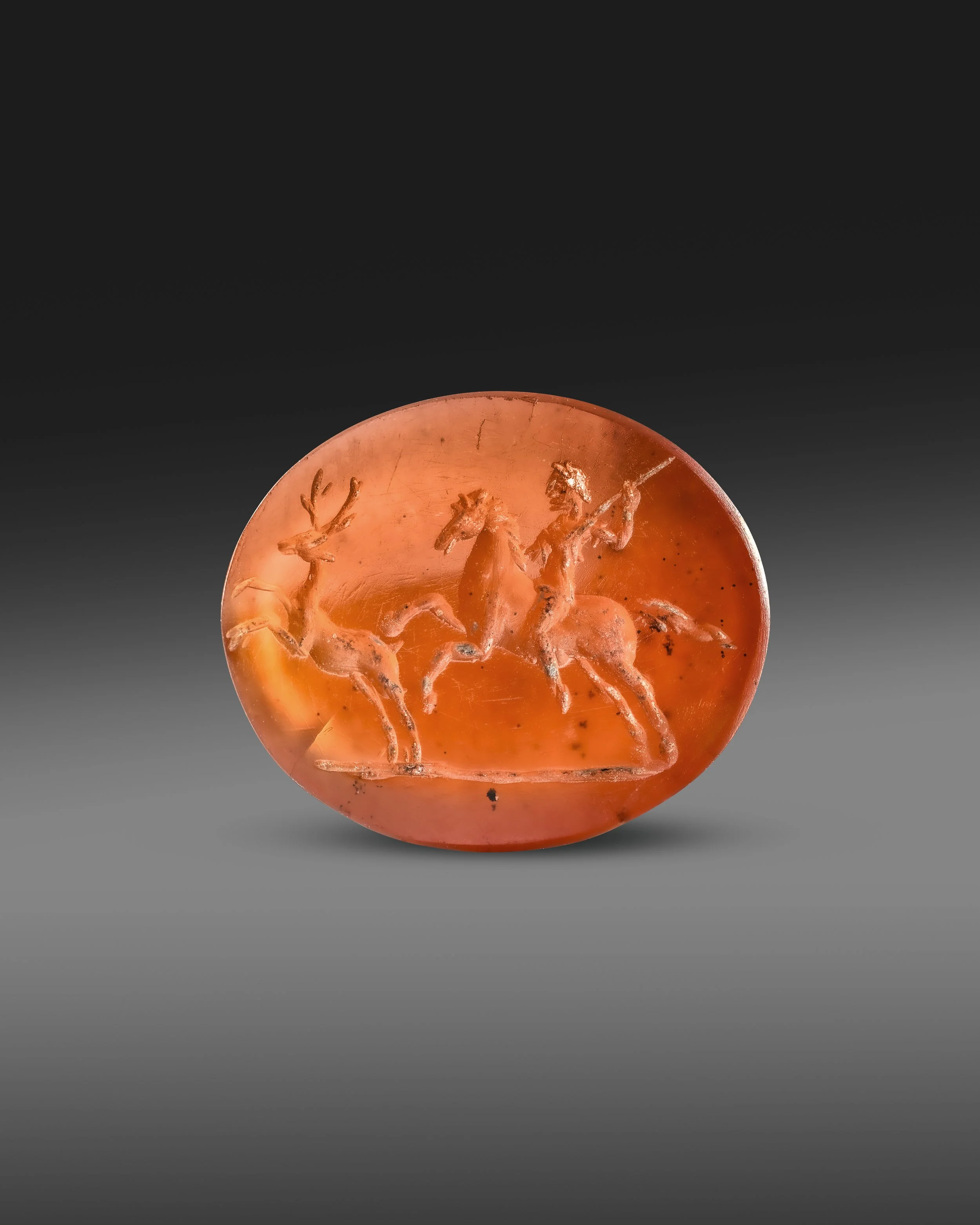
Reddish translucent carnelian oval tapered tablet intaglio depicting a male figure riding a horse while hunting a deer towards the left.
The gem depicts a hunting scene, showing a mounted hunter in pursuit of wild game, rendered in swift, lightly incised lines that emphasise movement and tension. The rider’s forward-leaning posture and the animal’s flight convey the drama of the chase rather than a specific narrative moment. Such scenes were widely used in Greco-Roman glyptic art as expressions of controlled violence and mastery over nature. As a seal stone, the image carried strong symbolic value. The hunt evoked ideals of courage, skill, and aristocratic virtue, projecting the owner’s identity as disciplined, active, and dominant. Reproduced in wax, the scene transformed the gem into a portable emblem of power, authority, and social status.
Carnelian is a type of chalcedony, a variety of polycrystalline quartz that displays a vitreous lustre.
c. 1st-2nd century AD
Length: 14mm, Width: 11mm, Depth: 3mm
Reddish translucent carnelian oval tapered tablet intaglio depicting a male figure riding a horse while hunting a deer towards the left.
The gem depicts a hunting scene, showing a mounted hunter in pursuit of wild game, rendered in swift, lightly incised lines that emphasise movement and tension. The rider’s forward-leaning posture and the animal’s flight convey the drama of the chase rather than a specific narrative moment. Such scenes were widely used in Greco-Roman glyptic art as expressions of controlled violence and mastery over nature. As a seal stone, the image carried strong symbolic value. The hunt evoked ideals of courage, skill, and aristocratic virtue, projecting the owner’s identity as disciplined, active, and dominant. Reproduced in wax, the scene transformed the gem into a portable emblem of power, authority, and social status.
Carnelian is a type of chalcedony, a variety of polycrystalline quartz that displays a vitreous lustre.